ALMOHAFED MANAGEMENT SYSTEM
A complete system for Quran memorization centers — a desktop application, a mobile app, and a Web API, all working on the same database.
OVERVIEW
AlMohafed (المُحفِّظ) manages the daily work of a Quran memorization center: students, teachers (sheikhs), recitation sessions (tasmee) and the mistakes made in them, plus a full Mushaf for reading.
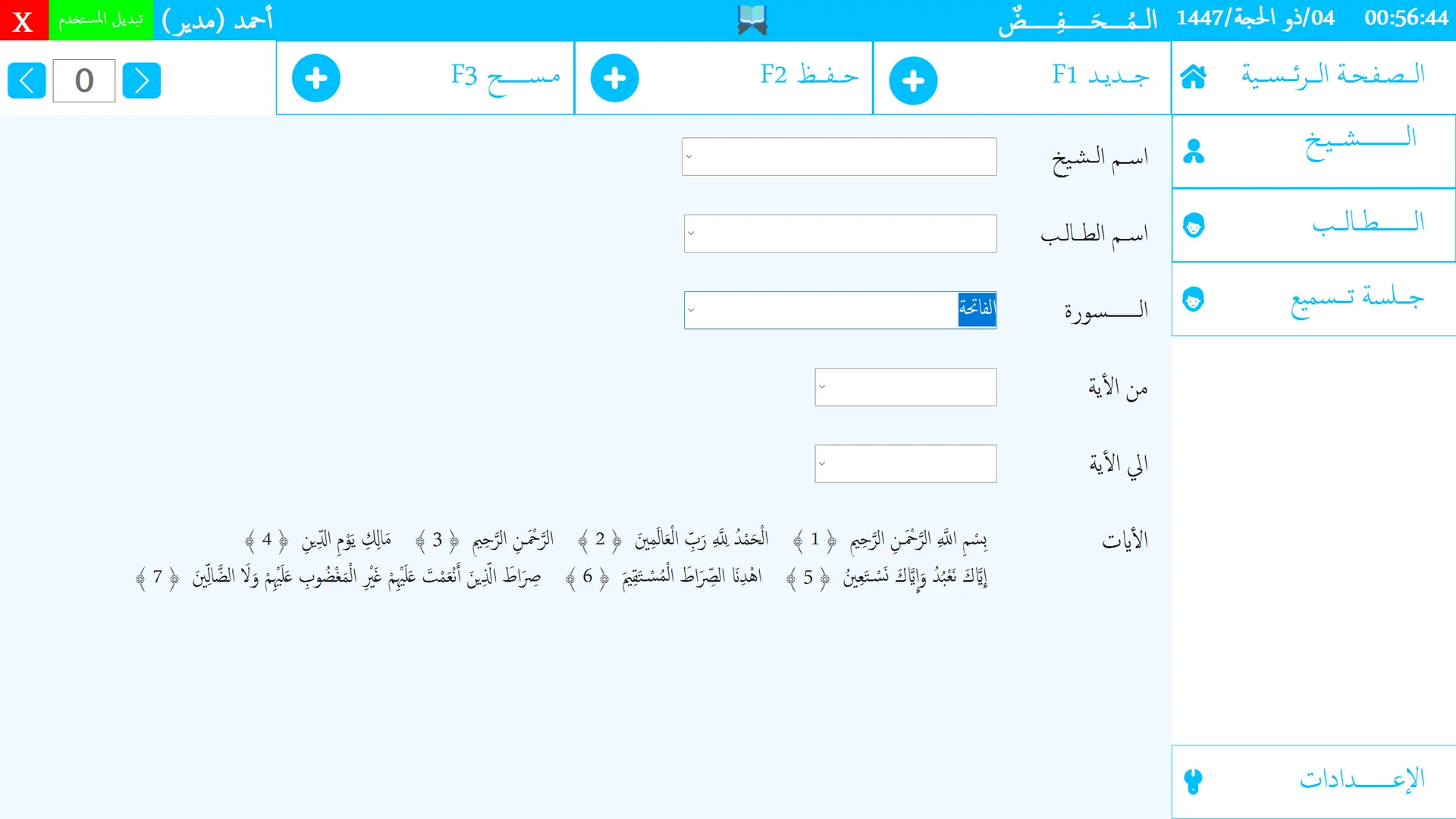
It began as a Windows desktop application. I then added a Flutter mobile app and an ASP.NET Core Web API between them — without changing the desktop program, which keeps working on the same, upgraded database.
ARCHITECTURE
01Mobile app (Flutter)Arabic right-to-left interface for Android and iOS. Talks to the server over HTTP/JSON; tokens are kept in secure storage.
02Web API (ASP.NET Core, .NET 10)33 endpoints organized as controllers → repositories, with Dapper for SQL, JWT authentication, role policies, input validation, and errors returned as ProblemDetails with Arabic titles.
03SQL ServerOne shared database with versioned migration scripts that upgrade an existing installation in place, without deleting data.
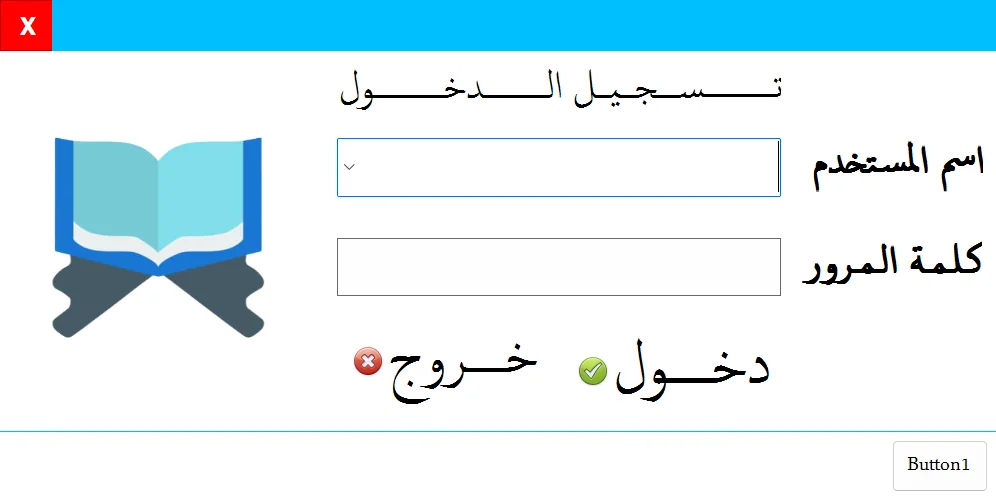
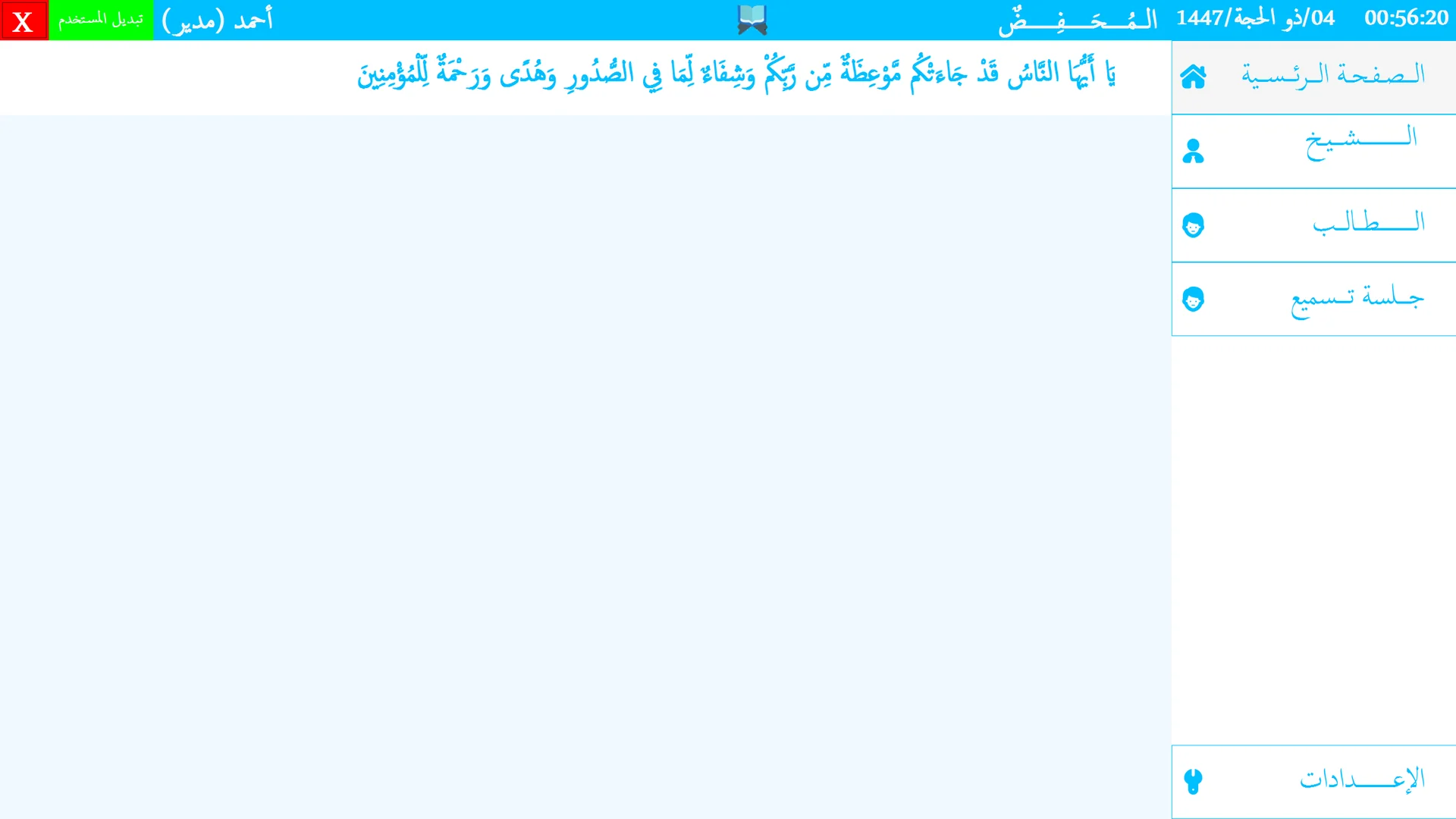
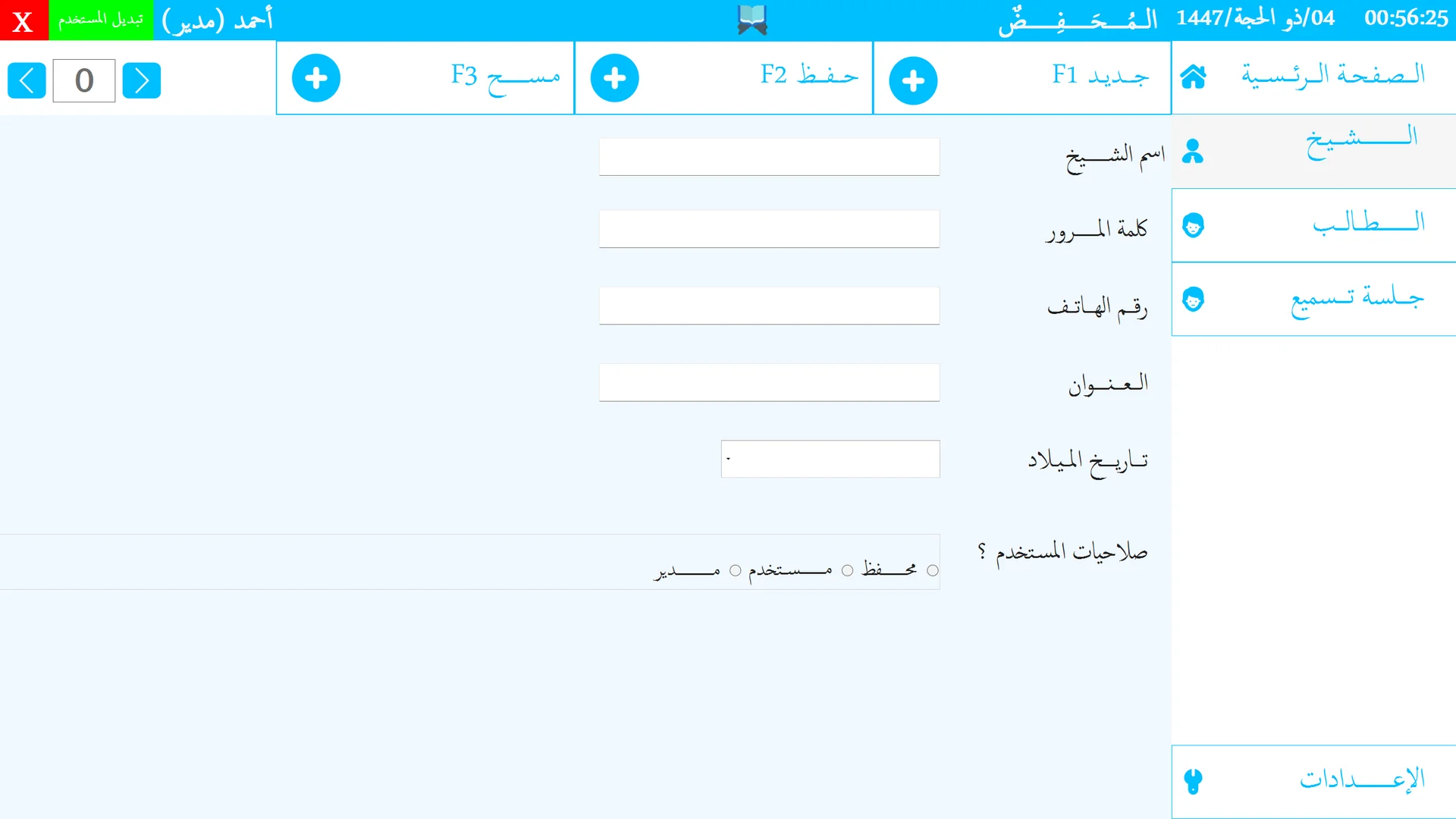
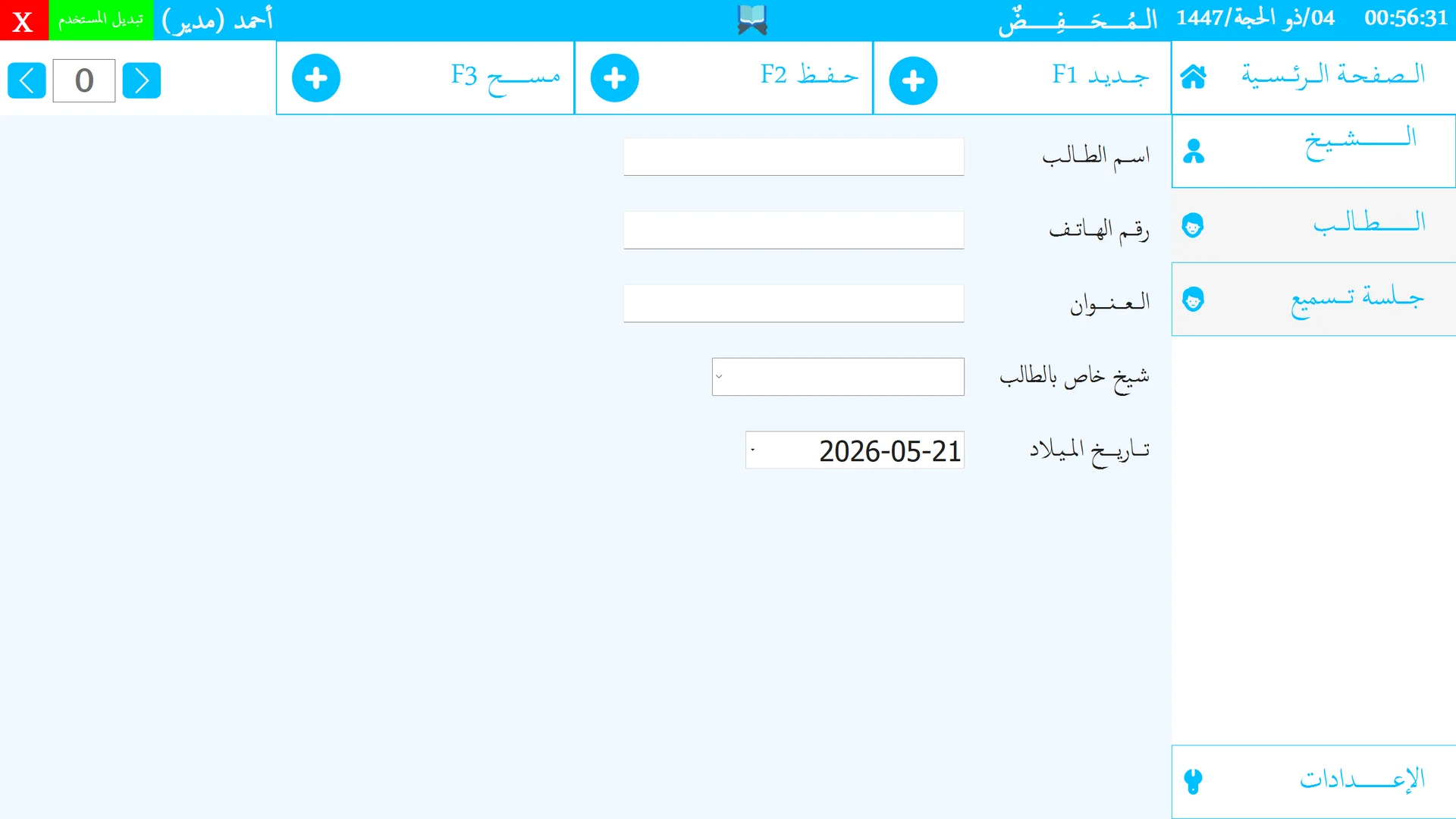
04Desktop app (VB.NET WinForms)The original program, using a repository-based design over ADO.NET and DevExpress controls — still connected to the same database.
WHAT THE MOBILE APP DOES
- Home: clock with Hijri and Gregorian dates, a verse or hadith of the day, center statistics, the latest sessions, and the most active students.
- Students: search, add, edit, and delete; each student page shows overall progress, progress per surah, most frequent mistakes, and session history.
- Recitation sessions: start a new memorization or review session by choosing a range in the Mushaf, record mistakes by tapping the verse, and grade the session.
- Mushaf: surah index, reading in a Mushaf-style typeface with adjustable size, and diacritic-insensitive search — all offline after the first download.
- Administration: manage sheikh, user, and admin accounts and the mistake categories.
- Settings: server address, dark mode, font size, and password change.
ROLES & PERMISSIONS
Admin
Everything, including deleting students, managing sheikhs, and editing mistake types.
User
Views all data, adds and edits students, creates sessions, and edits or deletes only their own sessions.
Sheikh
A teacher record that students are assigned to; it does not sign in.
ENGINEERING DECISIONS
Upgrade, don’t replace
A setup script detects whether the database is new or legacy and migrates it to the new schema version in place, so the desktop app and existing records survive.
Repairing the Quran text
The legacy data had broken characters, shifted verse numbers, and the basmala fused to the first verse. The API corrects numbering and separates the basmala itself, and a tool imports a verified Tanzil text to fix the source.
Passwords in transition
The API stores PBKDF2 hashes, while a configuration switch keeps the desktop app’s legacy passwords working until it is retired.
Hardened login
The login endpoint is rate-limited per client IP in one-minute windows; too many attempts get a 429 response.
DATA MODEL
The core tables, shared by every client:
Students & Sheikhs
Student details and the sheikh each student belongs to; sheikh accounts with their role.
Suras & Ayat
The full Quran text, indexed by surah and verse, used for reading and for selecting session ranges.
Tasmee sessions
Student, sheikh, date, type (new memorization or review), grade, and the verse range from–to.
Tasmee errors
Each mistake linked to its session, its exact verse, and a category such as Tajweed, a forgotten word, or pronunciation.
TESTING
Server
82 xUnit tests covering JSON contracts, roles and calendar rules, Quran text handling, and authentication integration.
Mobile
172 Flutter tests for the app’s logic and screens.
Database
PowerShell tests that run the migrations against a legacy schema and verify the import/export tools.
* Source code is available on request — get in touch via the contact section.